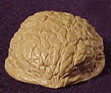
The Shell Game’s Allure
At the end of the 1800s one of the best known shell men
in the United States was Jim Miner, also known as Umbrella Jim.
He used to introduce his game with a wonderful little song, thankfully
recorded in Gambling and Gambling Devices by John Phillip
Quinn (a reformed gambler), which went as follows:
A little fun, just now and then
Is relished by the best of men.
If you have nerve, you may have plenty;
Five, draws you ten, and ten draws twenty.
Attention giv’n, I’ll show to you,
How umbrellas hide the peek-a-boo.
Select your shell, the one you choose;
If right, you win, if not, you lose;
The game itself is lots of fun,
Jim’s chances though, are two to one;
And I tell you that your chance is slim
To win a prize from ‘Umbrella Jim’!
The Three Shell Game holds a unique place in the
world of magic, and many of the top names in magic featured it
prominently in their performances. The shells are placed upon
the table and before a word is said, the audience’s curiosity
is running away. It is difficult to pin down its allure on the
public. Is it gambling . . . a con . . . sleight-of-hand? Or
perhaps the result of a dark pact with the underworld? Many have
heard of the game, but few have seen it performed live with actual
walnut shells.
These shells, unavailable for many years, were favored
by such pros as Mike Rogers and Frank Garcia. Often referred
to as “Italian walnuts,” very few people had access
to them and they were available only in very limited quantities.
The originals had one major drawback, their notable brittle nature,
which rendered them dry and fragile over time. With La Maggiore,
we provide workers with a set of almost indestructible shells
that, with appropriate care, will last a lifetime.
La Maggiore shells are manufactured in high-impact
resin, and are the largest commercially available. Molded from
an actual walnut similar to those used by the greats, La Maggiore
was lovingly sculpted and refined for perfect sensitivity. The
original walnut came off one of two trees remaining on the only
plantation in the Northern Hemisphere that still grows them.
Great pains have been taken to ensure that the color and
texture says definitively “walnut shell.” This shell
was sanded and then filled with putty to smooth out the interior,
molded, cast and then sanded further to ensure a fluid response.
The only other work put into these shells is in the back edge,
where a gentle “inverted V” has been sculpted in to
minimize shell motion during the steal.
Virtually indestructible, washable and modifiable (see
Specifications), La Maggiore
is the finest set of shells ever commercially available.
A good tool does the job adequately, a great tool enhances
the abilities of the worker, enabling him to soar to heights
previously thought unattainable.
Thus it could be said that these replica walnut shells
are perhaps better than the real thing. Treat them roughly and
they come back screaming for more. Treat them kindly, respect
their powers and you might one day be able to retire to finer
pursuits, your every need provided for . . .
HISTORICAL REFERENCES
I wanted to share some of my research with shell game aficionados.
I recently discovered a reference to thimble-rig that predates
any previously known references by almost fifty years.
From a book about
Lord Mayors of Hull
(East coast town in Yorkshire, UK)
HULL ELECTIONS c. 1670 -
Richard Perry and his fiddler wife
Owre hys Shoppe Tewel-Peice, hee hath depeyntid ye Wordyns
"Ys bee ye Whyte Swanne" yn bygge letteryns-ase wel
ase ye lyne- "Yffe I trustes afore I tryes, I maie repente
afore I deyes." Anewste evrie nyghte a Beavie, o Blackgardes,
Byrders, an Blabblers, wyl gette togedder atte hys Stewe, an
lake atte Cardes, Merryls, Skyttels, Nobbes an Stuntes, an odder
games o a lyke kynde-atte alle o whych Perry bee dempt a Heppen
honde-soe Heppen yt hee canne alwaie amenage toe beyape hys Compagnyons,
who bee o ye vylest sorte. Pott-Hawkers, Swepes, Tantrels, Pedler-men,
Women o ye Towne, an Tatter de Mallyones o ye mowste fylthie
descrypte bee hys reglar Customeres. Dogge-fyghtyn, Cock-fyghtyn,
Bulle-batyn, Thymbel-rygge an Nine-pins
bee hys favorid emploie.
OTHER MORE COMMON
(BUT DETAILED) REFERENCES FOLLOW.
From Trivia: Or, the Art of Walking
the Streets of London. Book II
by John Gay (1716)
EXCERPTED
Careful Observers, studious of the Town,
Shun the Misfortunes that disgrace the Clown;
Untempted, they contemn the Jugler's Feats,
Pass by the Meuse, nor try the Thimble's
Cheats.
When Drays bound high, they never cross behind,
Where bubbling Yest is blown by Gusts of Wind:
And when up Ludgate-hill huge Carts move slow,
Far from the straining Steeds securely go,
Whose dashing Hoofs behind them fling the Mire,
And mark with muddy Blots the gazing 'Squire.
The Parthian thus his Jav'lin backward throws,
And as he flies infests pursuing Foes.
From The Every-Day Book
by William Hone (1825)
Thimble and Pea.
On the 8th of June, 1825, a publican in the neighbourhood
of Whitechapel was charged at the Public Office, Bow-street,
by Mr. John Francis Panchaud, a foreigner, with having, in conjunction
with several other persons, defrauded him of a 10l. note,
at Ascot Heath race-course, on the Thursday preceding. The alleged
fraud, or robbery, was effected by means of an unfair game known
among the frequenters of races and fairs by the name of "the
thimble rig," of which J. Smith, the officer, this day gave
the following description to Mr. Minshull, in order that the
worthy magistrate might perfectly understand the case:—A
gang of seven or eight, or more, set up a table, but they all
appear strangers to each other, and unconnected with the game,
except one who conducts it, and who appears to be the sole proprietor.
This master of the ceremonies has three thimbles, and is provided
with a number of peas, or pepper-corns. He puts one under each
thimble, or perhaps only under one or two, as the case may be.
He then offers a bet as to which thimble a pepper-corn is or
is not under, and offers at first such a wager as is eagerly
taken by those round the table, and he loses. He pays the losings
freely, and the other members of this joint-stock company affect
to laugh at him, as what they call a "good flat." Having
thus drawn the attention, and probably excited the cupidity of
a stranger, who appears to have money, they suffer him to win
a stake or two, and get him to increase his bets. When he seems
thoroughly in the humour, the master of the table lifts a thimble,
under which is a pepper-corn, and turning his head aside to speak
to some one, he suffers the corn to roll off; and, seeming to
be unconscious of this, he replaces the thimble, and offers bets
to any amount that there is a corn underneath that particular
thimble. The stranger having seen the corn roll off "with
his own eyes," as the phrase is, chuckles to himself, and
eagerly takes the bet; the thimble is removed, and behold !—there
is a pepper-corn under it still, the fellow having dexterously
slipped another under it when the first rolled off the table.
"So that the plain fact is, sir," continued Smith,
"that the stranger, fancying he is taking in the master
of the table, cheerfully stakes his money with a dead certainty,
as he supposes, of winning, and he finds that he has been taken
in himself." Smith said, he had known instances of gentlemen
getting from their carriages, and in a few moments ridding themselves
of 20l. or 301., or perhaps more, and going off
wondering at their folly, and looking uncommon silly.
It appeared that Mr. Panchaud went up to one of these tables,
at which the defendant and many others were playing, and after
winning two or three times, the trick above described was commenced.
The conductor of the game offered a bet of 5l., and Mr.
Panchaud having seen the pepper-corn roll off, took the wager,
and put down a 10l. note. In a moment after there was
a general hustling, the table was upset, and the whole party
speedily disappeared, together with the 10l. note. When
the bet was offered, the defendant, who stood next to him, jogged
his elbow, and said eagerly, "Bet him, bet him; you must
win, the ball is under our feet." Mr. Panchaud had no doubt,
from his whole manner, that the defendant was concerned with
the others in the trick. The case stood over for further investigation.
It is only mentioned here for the purpose of showing a species
of slight of hand continued in our own times to defraud the unwary.
From The Reformed Gambler
by Jonathan H. Green (c.1858)
CHAPTER XI. THE GAME OF THIMBLES.
Dr. Bennett the King Thimble player—The young man
with two such piercing eyes—Best two in three.
Who has not heard of the game of Thimbles ? For the edification
of those who have been so fortunate as never to have seen
it, we will briefly describe it.
The sporting gentleman produces three common sewing
thimbles and a small ball, and placing them on his knee or some
smooth surface, commences operations by rolling the little ball
by his third finger under each of the thimbles, which are in
a row, lifting first one and then another, as the ball approaches
it, with his thumb and forefinger, and playing it along from
one to the other. When all is ripe he suffers the ball to stop,
half disclosing, half concealing its resting place. Hands are
then lifted, and the easy dupes make their bets as to the identical
thimble under which the ball may be found. The strength of the
game lies in the legerdemain by which the gamester removes the
ball and places it under any thimble he may choose, after the
bet is made.
Thousands of dollars have been lost at this game. Some
years ago, I took a trip upon one of the fine Southern steamboats
up Red River to the foot of the Raft. As usual there was a large
number of passengers on board, among them the celebrated Dr,
Bennett the inventor of the game of "Thimbles!" The
Dr. frequently amused the passengers with several games, particularly
one called "Calculation," which seemed to be his favorite,
and brought him quite a revenue during the trip. The Doctor himself
was quite a subject of curiosity and study to us, having heard
so much of his unrivalled shrewdness as a "sportsman,"
and the vast amount acumulated by him by the little game
of Thimbles. Indeed, it was said that he was the moving cause
of several penal statutes, in regard to gaming on Thimbles, having
been enacted in the states of Georgia, Alabama, Mississippi and
Tennessee.
One evening after supper it was insisted by some of the
passengers that the Doctor should exhibit the game of Thimbles,
which with his usual modesty he declined to do, protesting among
other things that he had no thimbles. This difficulty was easily
remedied, a messenger was dispatched to the ladies' cabin, and
soon returned with the required number. The Doctor made him a
little ball of paper and commenced his performance. At first
he was quite unlucky—but he paid up punctually, and consoled
himself with a favorite expression of his, that "sometimes
I am very severe, then again not quite so sly."
Among the lookers on was a young gentleman from the good
old state of Connecticut, on his first visit "South"
He was on his way to the head of navigation with a pretty little
stock of groceries, by way of trying his fortune in the great
West. He soon manifested much interest in the game, declaring
he knew the thimble under which the ball might be found. The
Doctor gave him a knowing wink and told him in a whisper not
to tell. But so often did our friend "guess" right,
that he laid aside all scruples of conscience, and desired to
be permitted to bet a few dollars. To this proposition the Doctor
at first objected, declaring "he did not like the young
man's eye, it was too keen," that he saw the ball, &c.
This seemed to please the Connecticut yankee very much, and made
him more anxious to bet.
After much parley and a good deal of reluctance on the
part of the Doctor, it was at last agreed that Connecticut might
bet a few dollars, "just a few," if he
would allow the Doctor a little chance against two such piercing
eyes as he had, by betting two to one. This being at length
settled our young friend put up his twenty dollars against the
Doctor's ten. Hands off and all being ready, he lifted the thimble
and sure enough there was the ball. The Doctor gave up the money
and all enjoyed a hearty laugh at his expense. This was the largest
bet that had been made that evening. The Doctor observed, "sometimes
he was not so sly." The ball and thimbles were again put
in motion—again all being ready our lucky friend proposed
to bet—but the Doctor declared he must have some chance
against such great odds as "yankee eyes," and insisted
on three to one, or thirty dollars to ten being made. This was
also accepted: again the thimble was raised, and sure enough
there was the ball. Our friend again pocketed another ten, and
again the "social hall" rang with laughter, at the
Doctor's expense.
The thimbles were again arranged; this time we observed
the game closely, as we thought from his repeated losses the
Doctor was hardly entitled to that great reputation for cunning
and sagacity which had ever been attributed to him. Now, in the
moving of the little paper ball, we thought we discovered the
source of the Doctor's misfortunes, for becoming a little unrolled,
a portion of the paper of which it was made, stuck out from under
one of the thimbles. This our Connecticut friend plainly saw,
and we presumed the Doctor, through old age, (now about 70) had
his sight so impaired as not to be able to see it, and could
not, therefore, play his game with his accustomed adroitness.
But the tale was soon told. Our "Yankee friend" proposed
to double the bet, "having the thing so dead." The
Doctor impatient of repeated losses, told him to make it hundreds
instead of tens. This was done, and our friend bet three hundred
dollars against one hundred dollars, (just here I thought it
a shame to take advantage even of a professional gambler's blindness,
for the location of the ball was evident.)
The money up, "Connecticut" was all impatient
to realize his expectations, and in great eagerness he again
raises the thimble—and sure enough, it was not there! He
had reached the climax of the Doctor's expectations in regard
to his ready cash and willingness to bet, and he could not win.
We have seen many pictures of disappointment, but the appearance
of that young man's countenance we can never forget. The laugh
was now uproarious. As much as you have pitied the poor dupe
the laugh was irresistible—but the poor fellow, "like
the boy the calf run over, saw nothing to laugh at." He
was a statue of amazed misery. The Doctor coolly pocketed his
cash, while our friend stammered out his astonishment with the
declaration that all was not right, that he had never bet before,
and had surely been taken in.
"Never mind," says the Doctor, "what's a
few hundred dollars to a young man with your eyes? The ladies
all admire them—I heard them speak of them to-day—and
you won twice out of three times—that's the best two in
three any how." |